 Chiptune Sequencer: C.H.I.P.
Two pulse, one wave, one noise
Four channel chiptune is written for a sound chip with exactly four voices. C.H.I.P. emulates them at the register level, so the controls mean what they meant on the original chip.
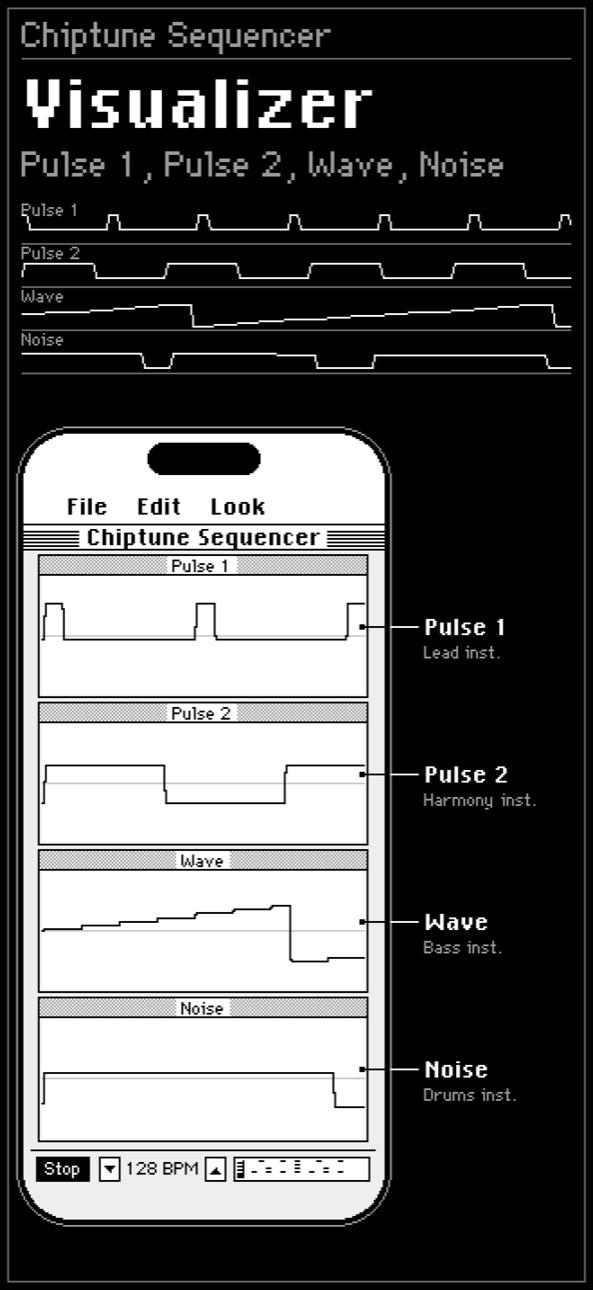
Pulse 1 and Pulse 2
Two square wave voices, usually the lead and the harmony. Their tone is the duty cycle, how much of each cycle the wave spends high: 12.5%, 25%, 50% or 75%.
Wave
A channel that plays a short waveform you choose, usually the bass. It has sixteen soft synth patches, from sawtooth and square to triangle and filter sweeps, which can play once, loop, bounce or be moved by hand. It has four volume steps rather than sixteen.
Noise
Drums and percussion: broadband Hiss for kicks and snares, or Metallic for ringing hats.
Position
The original hardware pans a whole channel rather than a note, so each channel is set to Left, Right, Center or Silent.
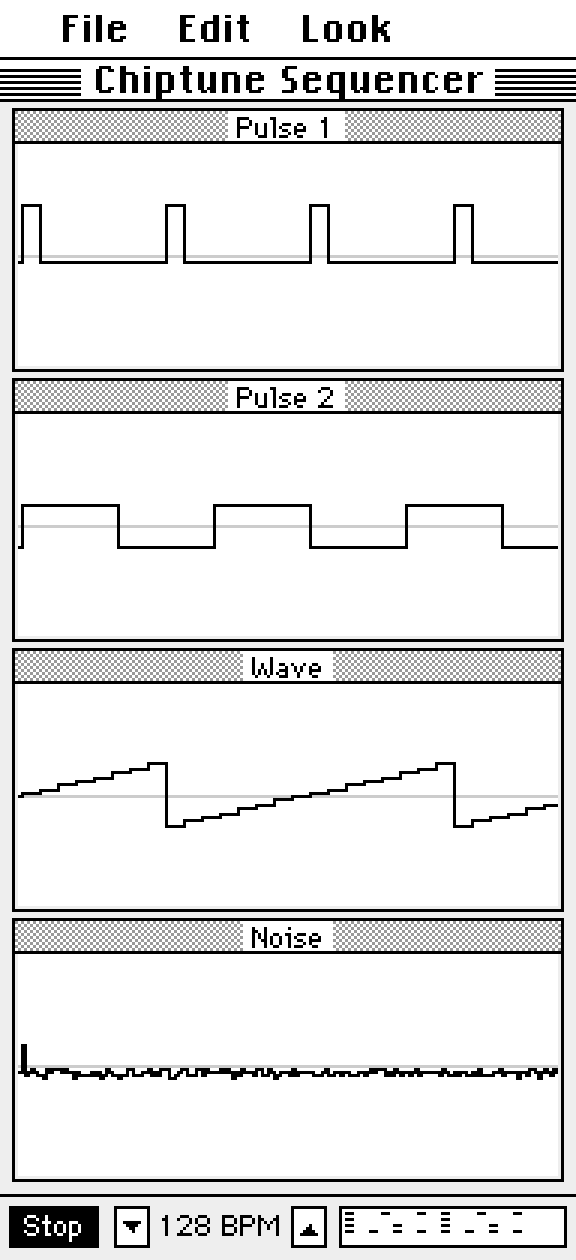
Check it against a recording
For the curious, File > Load reference plays a recording alongside your song, with an offset nudge, a level trim and a null test, so you can hear just the difference.
Questions
Why only four channels?
That is what the original chip had. Writing within the limit is half the fun, and it is why chiptune sounds the way it does.
Try it in Chiptune Sequencer: C.H.I.P.
Free on the App Store for iPhone and iPad. Requires iOS 17 or later.